
-
Diesel Generator Sets
-
By Power
-
By Brand
-
By Type
-
Diesel Generator Sets
-
Gas Generator Sets
-

Get the latest industry news
Silent canopies are typically applied to units ranging from 10kW to 600kW. The core engineering objective is to maximize noise suppression without compromising airflow efficiency.
Porous Absorption Media: The interior is lined with high-density, flame-retardant mineral wool or specialized foam. Sound waves enter the microscopic pores of the material, where friction converts acoustic energy into thermal energy.
Mass Law Barrier: 2mm to 4mm cold-rolled or galvanized steel plates act as a high-mass barrier to block sound transmission.
Labyrinth Airflow Design: Intake and exhaust paths are engineered with multiple "bends." Since sound travels in straight lines, these "labyrinths" force sound waves to strike absorbent surfaces repeatedly, significantly reducing the output decibel levels.
Physical Sealing: EPDM (Ethylene Propylene Diene Monomer) rubber gaskets are used on all door frames to eliminate "sound leaks."
Surface Treatment: After pickling and phosphating, a static polyester powder coating is applied, ensuring the structure remains corrosion-free in extreme outdoor environments.
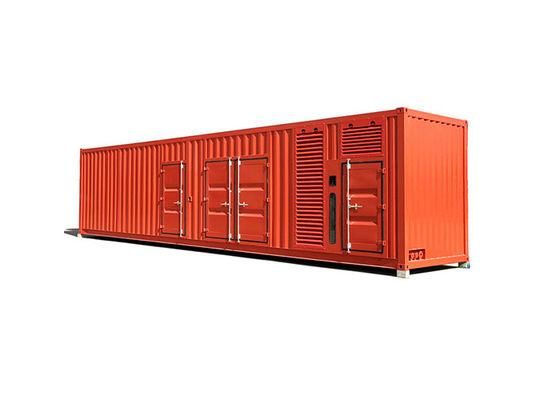
For units exceeding 800kW (such as the 890kW Weichai series) and 10.1kV/6.3kV High-Voltage (HV) systems, a containerized enclosure is mandatory. This is an integrated, walk-in mobile power plant.
High-Volume Air Exchange: Large-output engines generate immense heat. Containers feature large-span intake/exhaust louvers and are often equipped with independent, motor-driven axial fans to maintain ambient temperatures within rated limits.
Optimized Airflow: The internal ducting is calculated to ensure fresh air flows across the radiator, alternator, and control panels, preventing localized "heat pockets."
Functional Partitioning: The interior is physically divided into the Engine Room (Power Zone) and the Control Room (Operation Zone).
Clearance and Insulation: For 10.1kV systems, the container provides the necessary air insulation distances (clearance and creepage). It allows for the installation of large-scale HV components, including vacuum circuit breakers and current transformers (CTs).
Electromagnetic Shielding: The steel structure acts as a "Faraday Cage," shielding external communication equipment from electromagnetic interference caused by high-voltage discharge.
Gas Suppression: Containers provide ample space for automated FM200 or CO2 fire suppression systems, integrated with smoke and heat sensors.
Structural Rigidity: Built to ISO standards, these units offer superior vibration resistance and physical impact protection during transit or in seismic zones.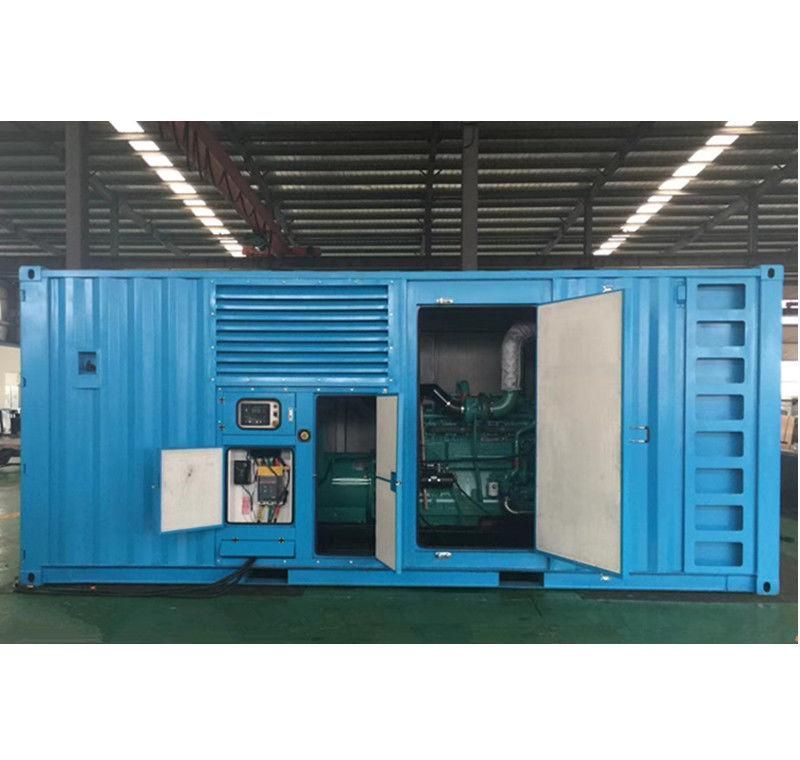
| Technical Metric | Silent Canopy Type | ISO Containerized Type |
| Power Rating | 10kW - 600kW | 800kW - 2500kW |
| Maintenance Access | External (Side Panels) | Walk-in Engine Room |
| High-Voltage Support | Not feasible (Limited Space) | Native Support (6.3kV / 10.1kV) |
| Logistics | Non-standard / Crated Shipping | Standard ISO Shipping / CSC Certified |
| Heat Dissipation | Standard Duty | Heavy-Duty / 24/7 Continuous Load |
When evaluating an 800kW / 10.1kV High-Voltage project, the selection logic should prioritize the following:
Safety Compliance: HV systems require strictly defined working clearances. A container is the only viable solution to ensure both safety and regulatory compliance.
Maintenance Efficiency: For large-bore engines (890kW class), routine inspections cover multiple points. A walk-in container significantly reduces the difficulty and error rate of long-term maintenance.
Long-term Asset Value: Containerized units offer superior mobility. In cross-border projects, the standardized logistics can reduce shipping and handling costs by over 30% compared to non-standard oversized cargo.
For technical drawings (CAD) or detailed specifications of the 800kW/10.1kV High-Voltage series, please contact our engineering team.
WhatsApp/WeChat: +86 18562792036
Official Website: www.globalgensets.com
No. 120, West Liaoyang Road, Liaoyuan Road Subdistrict, Shibei District, Qingdao City, Shandong Province, China